



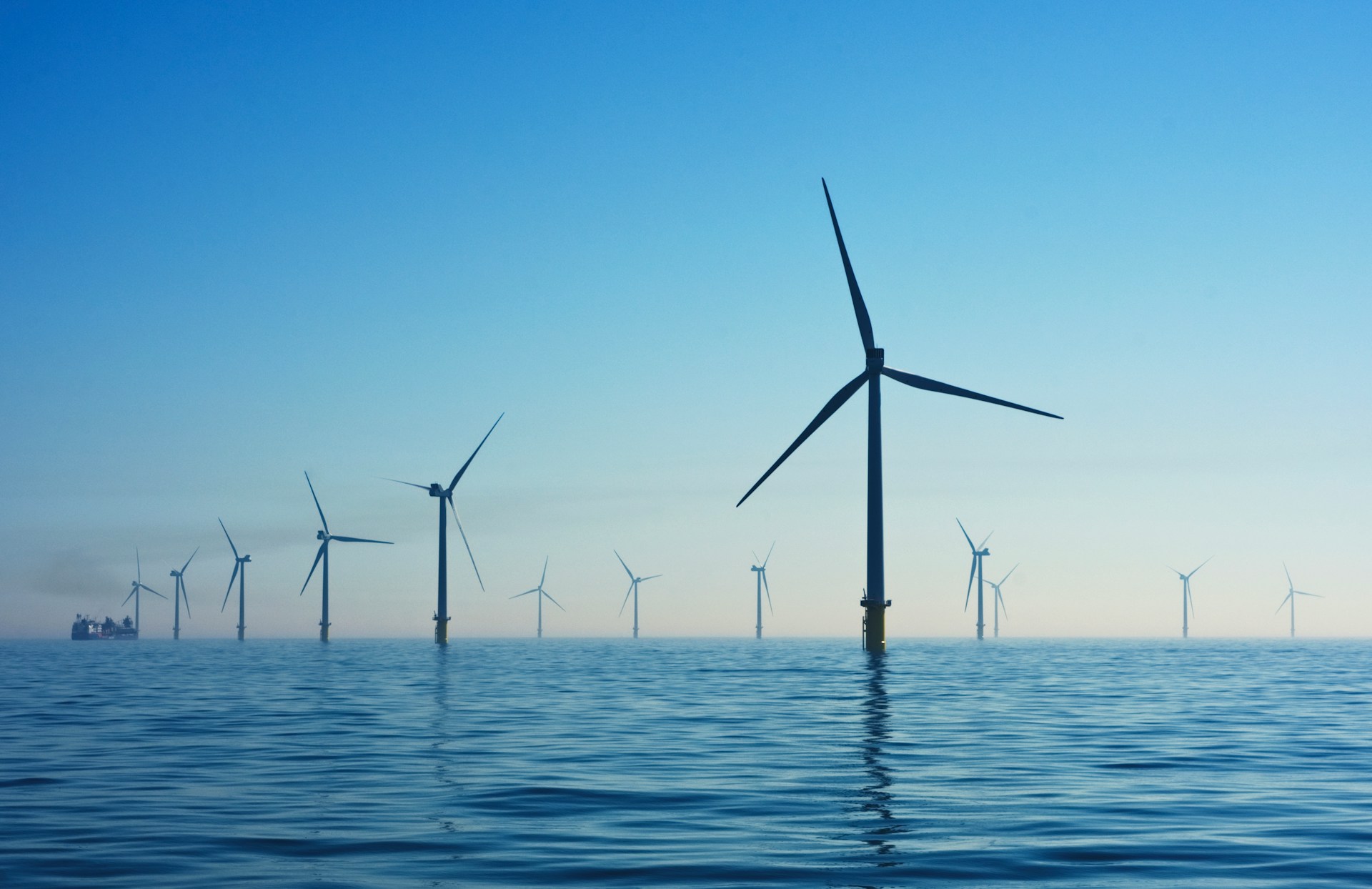
The Growth of Offshore Infrastructure and Cable Management Demands
The offshore industry is undergoing a period of unprecedented growth. Globally, installed offshore wind capacity reached a total of 83 gigawatts by the end of 2024. In the North Sea alone, nine countries have committed to installing 120 gigawatts by 2030. Germany already had 7.4 gigawatts installed in the North Sea by the end of 2024, while the Netherlands, the United Kingdom, and Denmark are also planning significant capacity expansions.
Alongside wind energy, oil and gas platforms continue to make up a substantial portion of offshore infrastructure. Many platforms built in the 1990s now require modernization of their electrical systems. Offshore transformer stations and commercial shipping complete the spectrum of maritime applications that demand robust cable management.
These diverse sectors share one critical requirement: components that can withstand extreme environmental conditions while maintenance access remains limited. A failure on an offshore wind turbine or platform can lead to costly downtime, as repairs can only take place within narrow weather windows. The selection of cable clamps and blocks for maritime applications therefore requires certified solutions specifically designed for these demanding environments.
The Unique Challenges of Maritime Environments
Corrosion and Chemical Stress
Saltwater creates one of the most aggressive environments for electrical infrastructure. Offshore systems are continuously exposed to a corrosive atmosphere where humidity remains constantly high. On platforms and inside wind turbine towers, this salt-laden air reaches every level of the structure.
Metal cable clamps are vulnerable to galvanic corrosion when different metals come into contact in the presence of saltwater. In oil and gas environments, H₂S gas (hydrogen sulfide) further accelerates degradation. KOZ cable clamps utilize glass-fiber reinforced polyamide that is inherently resistant to saltwater, UV radiation, ozone, and aggressive chemicals. The virgin material ensures consistent properties without the weakening effects associated with recycled components.
Mechanical Stress and Thermal Cycling
Offshore platforms and wind turbines experience continuous mechanical loads from wave action, nacelle rotation, and vibrations from rotating equipment. KOZ products are tested for resistance to these dynamic loads, where glass-fiber reinforcement provides rigidity without becoming brittle.
Thermal cycling places additional demands on materials. Cables in engine rooms reach temperatures exceeding 100°C, while installations in Arctic waters experience ambient temperatures of -40°C. KOZ cable clamps maintain their mechanical properties between -80°C and +120°C for permanent use, with short-term peaks up to +220°C.
Limited Accessibility
Access to offshore installations is dictated by weather conditions. In the North Sea, average accessibility is limited to 40 percent of the year. Mobilizing service vessels and offshore crews costs between €5,000 and €15,000 per day.
This limited access makes components that function reliably for decades essential. When cable clamps fail, it can lead to insulation damage or short circuits. The costs of an unplanned offshore repair often exceed initial material costs by a factor of ten to twenty. KOZ therefore offers a lifetime warranty on its cable clamps, underscoring confidence in performance and reducing risk for the user.
Materials and Certifications for Maritime Applications
Material Choice for Extreme Conditions
Non-metallic cable clamps offer specific advantages in maritime environments. Polyamide materials completely eliminate the risk of galvanic corrosion. The material is inherently electrically insulating, preventing grounding issues and providing additional safety.
The glass-fiber reinforced polyamide used by KOZ combines high strength with excellent chemical resistance. Tests show the material is resistant to seawater, industrial oils, hydraulic fluids, fuels, and alkalis. The halogen-free composition produces no toxic gases in the event of fire — crucial in confined spaces such as ship decks or platform modules. Self-extinguishing properties according to UL 94 V0 prevent sparks from escalating.
Lloyd’s Register Type Approval
Lloyd’s Register, founded in 1760, is the oldest classification society for the maritime sector and sets standards for ships, offshore structures, and components. The Type Approval certificate represents a rigorous validation process in which products are tested under conditions simulating maritime service.
KOZ Products has obtained Lloyd’s Register Type Approval for its cable clamps and blocks. The certification process includes tests for fire behavior, flame spread, and smoke development. Salt spray tests simulate years of exposure by subjecting components to a salt solution for over a thousand hours. Vibration tests validate that fasteners maintain their grip under continuous oscillation.
This certification opens access to international maritime markets and meets the requirements set by shipping companies, platform operators, and offshore contractors. The certificate is globally recognized and simplifies the approval process with various national authorities.
Short-Circuit Performance per NEN-EN-IEC 61914:2021
KOZ Products comply with the international standard NEN-EN-IEC 61914:2021 for cable cleats. This standard specifies performance criteria for short-circuit resistance. Electrical faults generate massive electromagnetic forces between cables. During tests, fault currents can reach tens of thousands of amperes, producing forces exceeding hundreds of kilonewtons.
KOZ conducted these tests at KEMA Laboratories (DNV-GL) in the Netherlands and at Schneider Electric under the supervision of SGS Belgium. The positive test results confirm that the cable clamps maintain their grip during extreme short-circuit events. This certification is relevant for offshore wind installations with medium-voltage cables operating at 33 kilovolts or higher, and for marine vessel installations with substantial electrical distribution capacities.
Offshore Wind Applications
Offshore wind turbines require extensive cable runs from the foundation to the nacelle. The transition piece is a critical point where cables are routed from underwater through the tower, experiencing extreme mechanical loads from wave forces.
Inside the tower, cables must be supported at regular intervals. Power cables for modern turbines have diameters reaching up to 100 millimeters or more. KOZ Products offers cable clamps suitable for diameters ranging from 11 millimeters for control cables up to 160 millimeters for transmission cables, meaning a single supplier can deliver the complete solution.
Offshore substations transform electricity from multiple wind turbines to high voltage for transport to shore. In Germany, several of these platforms are operational to support the 7.4 gigawatts of installed capacity. These installations contain complex electrical systems where the cable infrastructure must both handle the electrical load and withstand the maritime environment.
Inter-array cables run between turbines and enter the sea via J-tubes. The exit point of the J-tube requires careful cable management to prevent damage. With the ambition to install 120 gigawatts in the North Sea by 2030, demand for reliable offshore cable management will increase substantially.
Oil and Gas Platforms and Marine Vessels
Oil and gas platforms contain extensive electrical systems for pumps, compressors, and accommodation. Many platforms require modernization of their infrastructure. The topside environment combines vibration, a saline atmosphere, and temperature fluctuations. KOZ products are also suitable for hydraulic lines, simplifying inventory management and installation.
Engine rooms on vessels represent extreme environments with intense vibrations and high temperatures. KOZ cable clamps provide the temperature resistance required, with permanent allowable temperatures up to 120°C and peaks up to 220°C. Oil resistance prevents degradation where leaks may occur.
The non-magnetic properties of KOZ products are relevant near navigation equipment sensitive to magnetic interference. Modern vessels with bow and stern thrusters require substantial electrical cables in confined spaces. KOZ cable clamps are designed for rapid installation without specialized tools, reducing labor costs.
Total Cost of Ownership Considerations
Maritime-grade cable management solutions carry a modest initial cost premium compared to standard products. However, the total cost of ownership more than justifies this investment. A single offshore repair can incur costs ten to twenty times the material costs due to vessel mobilization, crew time, and production loss.
When an offshore wind turbine is out of service, the operator loses direct revenue. For a modern 8-megawatt turbine, this can amount to several thousand euros per day. Avoiding a single unplanned repair through reliable components can recover the cost premium many times over across a project’s lifetime.
Offshore projects using certified components can negotiate more favorable insurance terms. Lloyd’s Register certification serves as proof that components meet industry standards, reducing the risk profile.
KOZ delivers complete solutions where the availability of cable clamps across the full diameter range means contractors can standardize on a single supplier. This eliminates the complexity of managing multiple vendors and guarantees consistent quality. The lifetime warranty further reduces lifecycle risk.
Supplier Selection Criteria
When selecting cable management for marine projects, engineers must evaluate several criteria. Maritime certifications come first, with Lloyd’s Register Type Approval being essential. These certifications guarantee validation by independent organizations according to rigorous testing protocols.
Material traceability is becoming increasingly important. Project owners require documentation including batch numbers and test certificates. A proven track record on comparable projects provides confidence that a supplier understands the specific requirements.
Technical support capability is valuable during design and installation. Suppliers who can support engineers with product selection and provide installation guidelines distinguish themselves. For projects with unique requirements, customization capability can be decisive. KOZ has experience with custom cable clamps, combining engineering expertise with manufacturing capabilities.
Future Outlook and Conclusion
The offshore industry faces a transition in which green hydrogen, floating wind, and digitalization are setting new demands. Floating wind turbines introduce additional movement dynamics that cable management systems must accommodate. These developments ensure that demand for proven solutions will continue to grow.
Marine and offshore environments place the most demanding requirements on cable management due to corrosive atmospheres, mechanical loads, and limited access. Selection requires products specifically designed and certified for maritime service.
KOZ Products offers cable management solutions that meet these requirements by combining maritime-grade materials, Lloyd’s Register Type Approval, and NEN-EN-IEC 61914:2021 certification with a complete diameter range and lifetime warranty. For offshore wind projects, platforms, and marine vessels, these solutions deliver the reliability essential for guaranteeing operational continuity where access is limited and downtime is costly.
The continued growth of offshore wind toward 120 gigawatts in the North Sea by 2030 ensures sustained demand for high quality cable management solutions capable of withstanding the challenges of the marine environment.
Professional cable management for marine and offshore infrastructure: Offshore wind turbines, platforms, and marine vessels require cable clamps and blocks that withstand saltwater, extreme temperatures, and mechanical loads while functioning reliably for decades. Certified solutions with Lloyd’s Register Type Approval and NEN-EN-IEC 61914:2021 certification, suitable for cable diameters from 11 to 160 millimeters, guarantee safe installations in maritime environments worldwide. Glass-fiber reinforced polyamide material provides corrosion resistance and electrical insulation for applications ranging from offshore wind farms to marine vessel installations.


